The Short Answer: 55 to 60°F, Never Off
Set the thermostat to 55-60°F before you leave for any trip longer than a day during the Inland Empire's heating season, and never switch the furnace off entirely. That range keeps the inside of exterior walls — where most of your supply pipes run — above the temperature where they freeze, while still cutting your gas use meaningfully versus leaving it at a normal daytime setting.
The number matters more than people expect. Go lower than 55°F and the margin against a hard freeze gets thin fast, especially overnight in Redlands and Temecula, where Thanksgiving-week lows regularly sit in the high 30s.
Why Not Just Turn It Off?
An empty house with the furnace off cools to whatever the outside temperature is, minus whatever insulation buys you — and insulation buys you less than people assume once a cold front settles in for a few days straight. Pipes running through an exterior wall, a garage, or an attic have almost no buffer once the house interior drops into the 40s.
A burst pipe while you're away isn't a repair you catch early. It's a repair you come home to, usually with water damage that costs far more than the gas you saved by shutting the furnace off completely.
Why Not Just Leave It at 70°F Either
The furnace doesn't need to keep the house at living-room temperature for nobody. Every degree you hold above the 55-60°F floor is gas spent maintaining comfort that no one is there to feel. The setback is the entire point — you're protecting the pipes, not heating the house for a trip you're not taking.
Setback by How Long You're Gone
| Length of trip | Recommended setting | Why |
|---|---|---|
| Overnight or a weekend | 62-65°F | Short enough that deep savings aren't worth the lower margin |
| A week (typical holiday trip) | 58-60°F | Meaningful savings with a real buffer against a cold snap |
| Two weeks or more | 55-58°F, and have someone check the house | Longer exposure to any single hard freeze or equipment issue |
| Home with pets left behind | 65°F minimum | Pets can't layer on a sweater or move to a warmer room |
The Exterior-Wall Pipe Problem Is Worse in Some Inland Empire Homes Than Others
Newer construction with pipes run entirely through conditioned interior space is fairly forgiving. Older homes in Redlands and parts of Moreno Valley sometimes have a kitchen or laundry line running through an exterior wall or an unconditioned garage, and that's the line that freezes first — often before the rest of the house feels cold at all. If you don't know whether your plumbing runs through an exterior wall, open the cabinet under any sink on an exterior wall and leave the door open while you're gone. It costs nothing and lets room-temperature air reach the pipe.
If You Have a Smart Thermostat
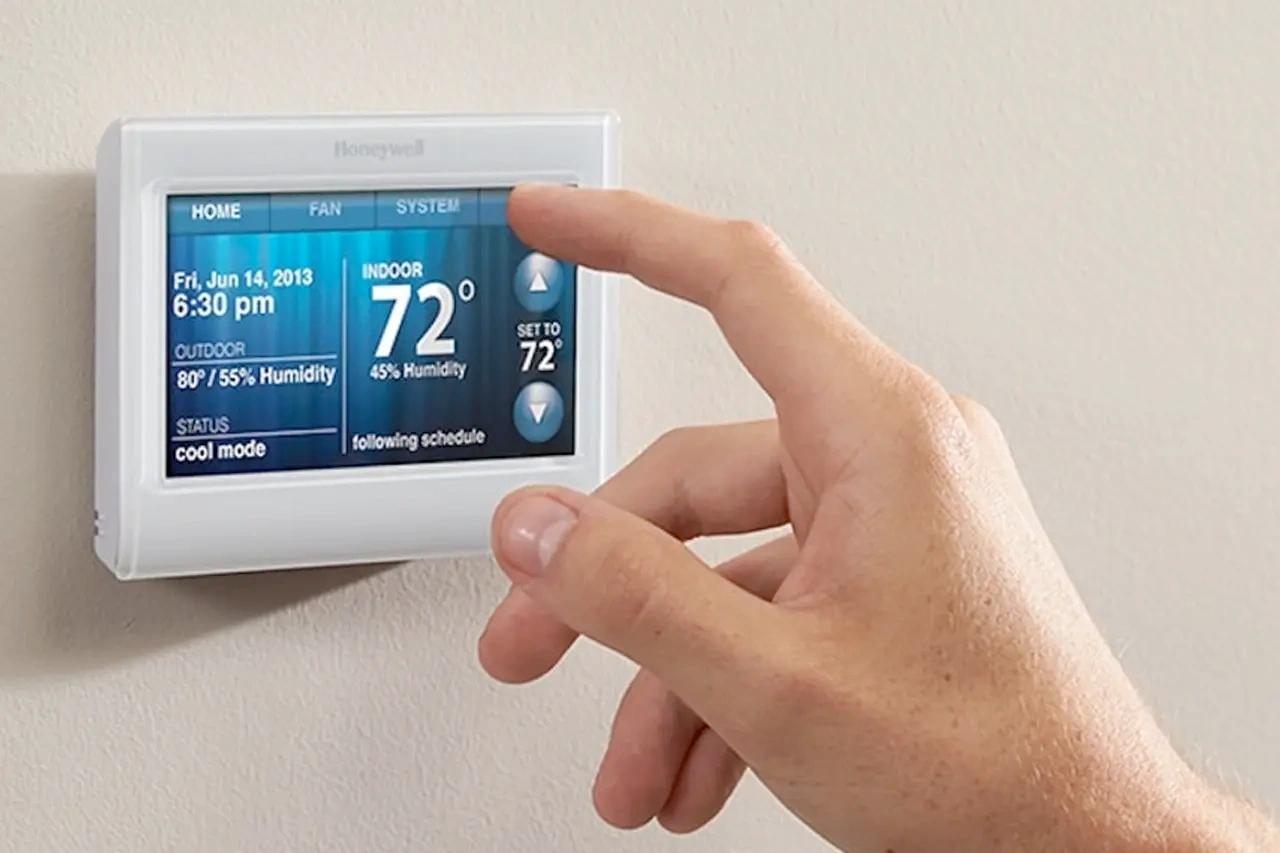
This is the one job a smart thermostat does better than you will, every time, without you remembering to do it. Set an away schedule once and it holds the setback automatically, then ramps the house back to comfortable before you walk in the door — geofencing handles that last part on most models without you touching the app. If you haven't decided whether a smart thermostat is worth buying, our breakdown of whether smart thermostats are worth it for Perris and Menifee homes covers the real payback, not just the marketing version.
If You Don't Have One
- Set the manual thermostat to the number from the table above before you lock the door — not a lower number "just to be safe," which defeats the purpose
- Open cabinet doors under sinks on exterior walls
- Ask a neighbor to glance at the house if you're gone more than a week, especially during a forecasted cold snap
- Leave interior doors open so heat moves freely between rooms instead of pooling near the thermostat alone
What About the Water Heater?
Leave it as is for trips under two weeks — standing loss is minor and not worth the recovery time when you're back. For longer absences, a vacation mode (most tank water heaters have one) trims standby loss without the multi-hour recovery a full shutdown requires.
Coming Home to No Heat
If you come back and the furnace won't climb out of that 55-60°F setback — it fires but the house stalls, or it won't fire at all — don't assume the worst and don't keep cycling the thermostat hoping it catches up on its own. Work through our no-heat emergency guide first, and if the furnace does catch up but the house feels unexpectedly dry afterward, that's a different and more common problem covered in why your heater isn't actually drying out your air.
Common Questions
What temperature should I set my thermostat when traveling in winter?
55 to 60°F for most Inland Empire homes on a trip of a week or less. Never switch the furnace off entirely — the point is protecting the pipes, not just saving gas.
Can my pipes really freeze inside a heated house?
Yes, if a supply line runs through an exterior wall, an attic, or a garage and the interior temperature drops far enough. These are the first lines to freeze, often before the rest of the house feels cold.
Is it cheaper to leave the heat on low or turn it off completely while away?
Low, every time. A furnace recovering a fully cold house to a comfortable temperature runs far longer and harder than one maintaining a modest setback, and a frozen or burst pipe erases any gas you saved many times over.
Does a smart thermostat actually help with this?
Yes — it's one of the clearest cases where the automation earns its cost. An away schedule holds the setback without you remembering, and most models bring the house back to temperature before you arrive.
What if I'm only gone for one night?
A deep setback isn't worth it for an overnight trip. 62-65°F is enough to save a little without meaningfully increasing freeze risk for that short a window.
Get the House Set Up Right Before You Go
If you're not confident your thermostat schedule, your furnace, or your plumbing can handle a week of cold Inland Empire nights with nobody home, get it looked at before you leave rather than finding out when you get back. Our 5.0-star rated team handles HVAC maintenance and furnace repair across Moreno Valley and the Inland Empire — including thermostat setup and programming. For broader winter preparedness beyond HVAC, FEMA's Ready.gov winter weather guidance is worth a look too. Schedule a pre-holiday check or call (951) 331-3310.
About the Author
Justin Jaszewski
Co-Founder & NATE-Certified Technician
Justin is the co-founder of It's No Sweat Heat & Air and a NATE-certified HVAC technician with over 25 years of hands-on experience across Moreno Valley and the Inland Empire. He leads the company's technical standards, trains every technician on the team, and personally inspects complex installations. Justin holds California HVAC license #1058772 and specializes in residential system design, load calculations, and energy-efficiency upgrades.