Smoke Season Is Now Part of the Inland Empire Calendar
Late summer and early fall reliably bring smoke to the Inland Empire — from Riverside County brush fires, from the San Bernardino National Forest, and from blazes hundreds of miles north that drift down on the wind. On the worst days, air quality index readings across Moreno Valley and Riverside climb into the unhealthy range and stay there for days.
The advice is always the same: stay indoors. But "indoors" is only safe if your home is actually filtering what it pulls in. In most Inland Empire homes, it isn't.
Why Wildfire Smoke Is Different From Normal Dust
Wildfire smoke is dominated by PM2.5 — particles under 2.5 microns across. They're small enough to bypass your nose and throat entirely and lodge deep in lung tissue. For comparison, a standard fiberglass furnace filter is designed to catch particles roughly 10 microns and larger. It will not touch smoke.
The EPA's guidance on wildfires and indoor air quality is blunt about this: filtration is the single most effective thing a homeowner can control during a smoke event.
Step 1: Upgrade the Filter Before You Need It
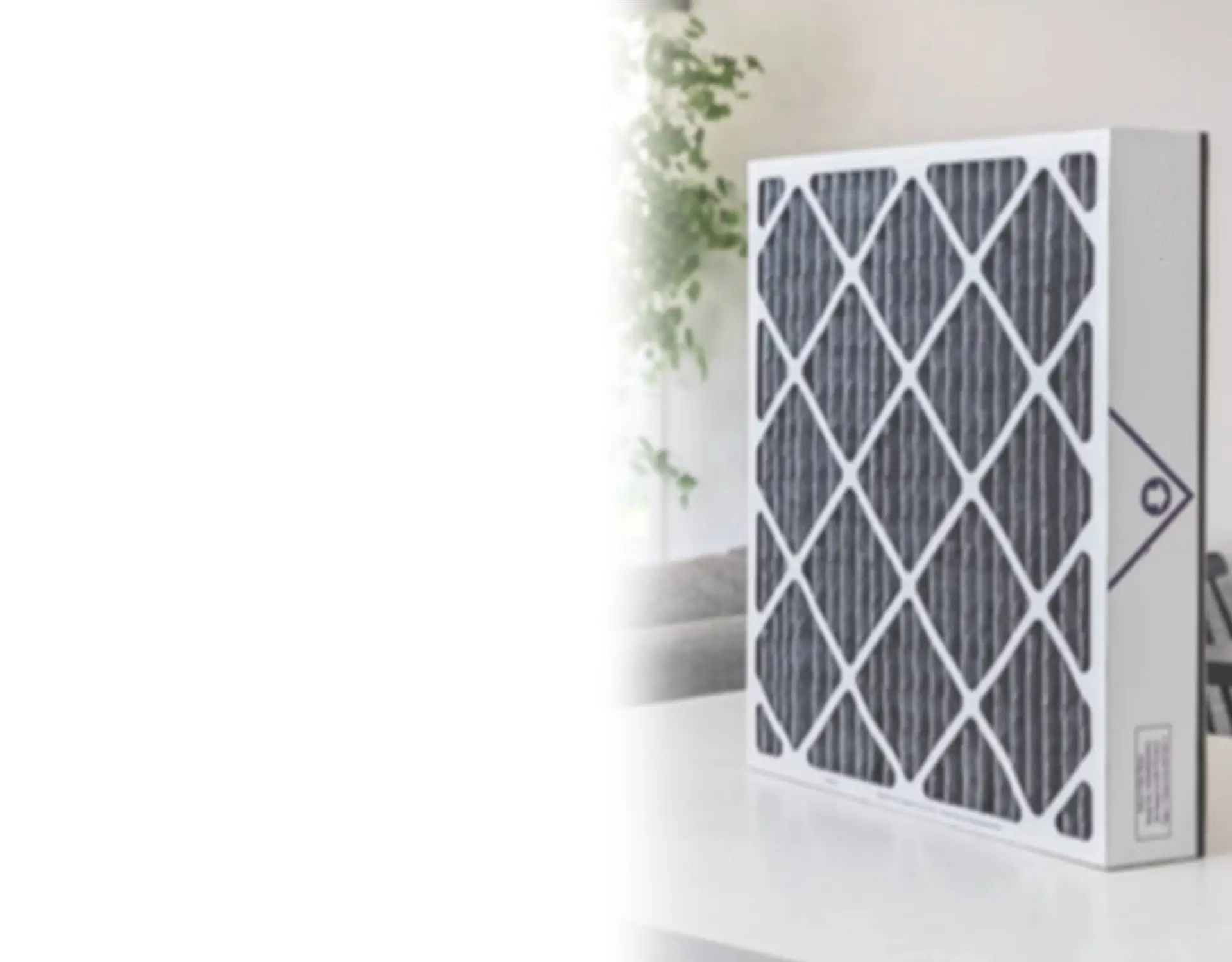
For smoke, you want MERV 13 minimum. A MERV 13 filter captures roughly 85% of PM2.5 particles on each pass — versus close to zero for a MERV 4 fiberglass panel.
The catch: not every system can handle a MERV 13 without straining the blower. Higher MERV means higher static pressure, and an undersized return can choke a system into short-cycling or freezing the coil. If your filter slot is a single one-inch panel and your system is more than a decade old, have someone verify the static pressure before you jump to MERV 13. We cover the airflow-versus-filtration tradeoff in more depth in our guide to HVAC filters and allergy season.
Step 2: Close the Fresh Air Intake
Some newer homes in Eastvale and other post-2010 developments have a mechanical fresh air intake to meet Title 24 ventilation requirements. It pulls outdoor air into the return by design — excellent nine months of the year, terrible during a smoke event. Know where yours is and know how to close the damper before you need to.
Step 3: Run the Fan, Not Just the Cooling
Your filter only works when air is moving through it. If your AC is cycling on and off, filtration stops between cycles. During a smoke event, switch the thermostat fan from AUTO to ON. The blower runs continuously, and every cubic foot of air in your home passes the filter several times an hour.
Yes, it uses more electricity. On a smoke day it's worth it. If you have a variable-speed blower, this costs surprisingly little — another reason continuous-fan capability is worth paying for on a new system.
Step 4: Seal What You Can
- Weatherstrip exterior doors — a gap under a front door is an uncontrolled, unfiltered air inlet
- Keep windows closed even at night, when the instinct is to open up as temperatures drop
- Skip the whole-house fan and evaporative cooler entirely during smoke events — both pull outdoor air in by design
- Run bathroom and kitchen exhaust fans only as long as you truly need them; they depressurize the house and pull smoke in through every crack
Step 5: Consider a Portable Unit for One Clean Room
Even a well-filtered HVAC system can't hold PM2.5 at zero during a multi-day event. A properly sized HEPA air purifier in a bedroom creates a clean-air refuge where people sleep. Size it by CADR rating against the room's square footage — a purifier rated for 200 sq ft does very little in a 400 sq ft primary bedroom.
Step 6: Change the Filter After the Smoke Clears
A filter that just spent a week catching smoke is loaded. Leaving it in restricts airflow, raises your energy use, and can off-gas captured compounds back into the airstream. Replace it as soon as air quality returns to normal — regardless of how many days the calendar says it has left.
What a Whole-Home Solution Looks Like
For households with asthma, COPD, young children, or anyone who simply doesn't want to live with a portable unit in every room, a media cabinet upgrade is the durable fix. A four- to five-inch media filter delivers MERV 13 or better filtration with far less static pressure penalty than a one-inch panel, and it lasts six to twelve months instead of thirty days. Paired with UV treatment, it handles both particulates and biological contaminants. Our indoor air quality team sizes these against your actual duct system rather than guessing.
Check Air Quality Before You Decide
The federal AirNow monitoring network publishes real-time AQI by ZIP code. It is the fastest way to know whether today is a fan-on-continuous day or a normal one.
Get Your System Smoke-Ready
An indoor air quality assessment covers static pressure, filter sizing, duct leakage, and fresh-air damper location — everything that determines whether your home protects you during smoke season. Our 5.0-star rated team serves every city across the Inland Empire. Request a free assessment or call (951) 331-3310.
About the Author
Justin Jaszewski
Co-Founder & NATE-Certified Technician
Justin is the co-founder of It's No Sweat Heat & Air and a NATE-certified HVAC technician with over 25 years of hands-on experience across Moreno Valley and the Inland Empire. He leads the company's technical standards, trains every technician on the team, and personally inspects complex installations. Justin holds California HVAC license #1058772 and specializes in residential system design, load calculations, and energy-efficiency upgrades.