The Worst Kind of AC Failure
A dead air conditioner is obvious. A running air conditioner that isn't cooling is worse — it burns electricity all afternoon while the house climbs from 78 to 84, and it's easy to lose a full day before calling anyone. In peak Inland Empire summer, that delay is often the difference between a modest repair and a failed compressor.
Work through these in order. The first four you can check yourself in fifteen minutes.
1. Dirty Air Filter
Start here, always. A clogged filter starves the evaporator coil of airflow. Less air across the coil means less heat removed, and in bad cases the coil freezes solid — at which point you get almost no airflow at all.
Check: pull the filter and hold it up to a light. If you can't see light through it, replace it. In the Inland Empire, 30–60 days is the realistic interval during cooling season, not the 90 days printed on the box.
2. Thermostat Set Wrong (Yes, Really)
Fan set to ON instead of AUTO means the blower runs continuously — including between cooling cycles — so room-temperature air comes out of the registers and everyone concludes the AC is broken. Also check that the mode is COOL rather than FAN, and that a schedule or vacation hold isn't overriding your setpoint.
3. Frozen Evaporator Coil
Check: look at the copper refrigerant line where it enters the indoor unit. Frost or ice means the coil is frozen.
Do this: set the system to OFF and the fan to ON. Let it run two to three hours to thaw. Replace the filter and open every register while you wait. If it cools normally afterward and doesn't refreeze, airflow was the culprit. If it ices up again within a day, you have a refrigerant leak — see #5. A thaw also dumps a lot of water, which is a common cause of the problem covered in our AC water leak guide.
4. Blocked or Filthy Outdoor Condenser
The outdoor unit rejects the heat your system pulls from the house. Caked with cottonwood fluff, dust, or dryer lint — or crowded by shrubs and stored items — it can't. On a 108°F day, a dirty condenser pushes head pressure high enough to trip the system on safety.
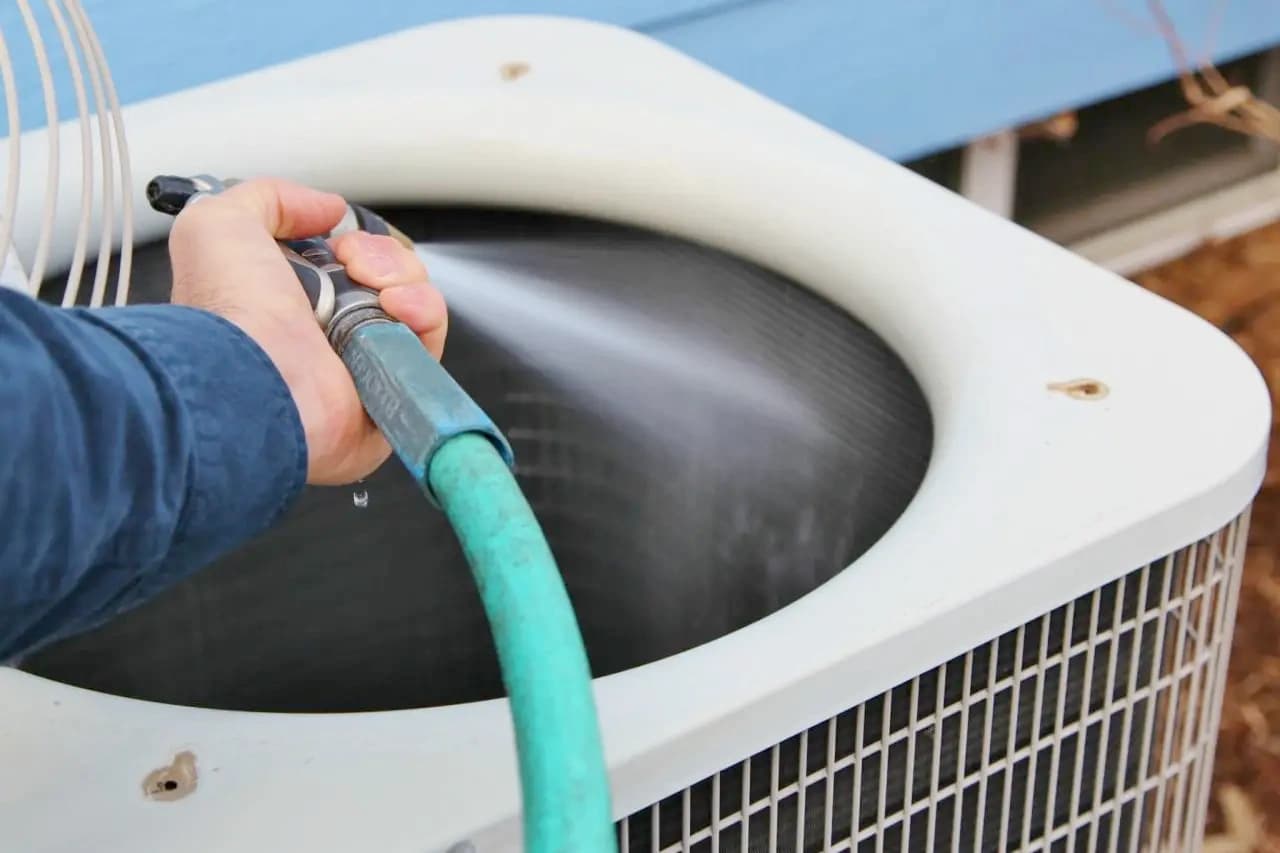
Do this: shut off power at the disconnect, clear at least two feet of space on all sides, and rinse the coil gently with a garden hose from the inside out. Never use a pressure washer — it flattens the fins permanently.
5. Low Refrigerant From a Leak
Refrigerant is not consumed. If you're low, there's a leak. Symptoms include ice on the suction line, a hissing or bubbling sound, longer and longer run times, and air from the registers that's only a few degrees below room temperature.
A technician who offers to "just top it off" without a leak search is selling you the same repair again next summer. Proper procedure: locate the leak with electronic detection or dye, repair it, pull a vacuum, and weigh in the correct charge. That's how our AC repair team handles every refrigerant call.
6. Failed Capacitor or Contactor
A common signature: the outdoor fan spins but the compressor doesn't, or you hear a hum and a click without a start. Run capacitors are the single most frequent failure point during Inland Empire heat waves — a small, inexpensive part that stops 100% of your cooling. Contactors pit and stick over time and produce similar symptoms.
These are inexpensive repairs, but they're not DIY — capacitors hold a dangerous charge even with the power off. If your system is over five years old, this is worth replacing proactively before summer, as covered in our heat wave prep guide.
7. Duct Leakage or Disconnection
If the air at the registers is genuinely cold but the house won't cool, the system may be working fine and delivering its output into the attic. A disconnected flex run is the classic version: one room goes completely dead and overall performance drops hard. Full detail in why leaky ducts steal a third of your cold air.
8. Failing Compressor
The expensive one. Signs include hard starting, breaker trips, loud grinding or screeching from the outdoor unit, and a system that runs continuously while producing barely cool air. On a system past twelve years, a failed compressor usually makes replacement the better financial decision — our 2026 cost breakdown lays out the numbers, and our early warning signs guide covers what leads up to it.
Stop Running It
If you've checked the filter, thermostat, and condenser and the house still isn't cooling, shut the system off and call. Running a struggling air conditioner through a 110°F afternoon is how a capacitor failure becomes a compressor failure. The Department of Energy's air conditioning guide makes the same point about operating a system outside its design envelope.
Same-Day Diagnostics Across the Inland Empire
We dispatch same day throughout Moreno Valley, Riverside, Perris, and every surrounding city during cooling season. Diagnostic findings come with a written estimate before any work begins — our 5.0-star rating across 101+ reviews is built on not surprising people. Book a diagnostic or call (951) 331-3310.
About the Author
Justin Jaszewski
Co-Founder & NATE-Certified Technician
Justin is the co-founder of It's No Sweat Heat & Air and a NATE-certified HVAC technician with over 25 years of hands-on experience across Moreno Valley and the Inland Empire. He leads the company's technical standards, trains every technician on the team, and personally inspects complex installations. Justin holds California HVAC license #1058772 and specializes in residential system design, load calculations, and energy-efficiency upgrades.