
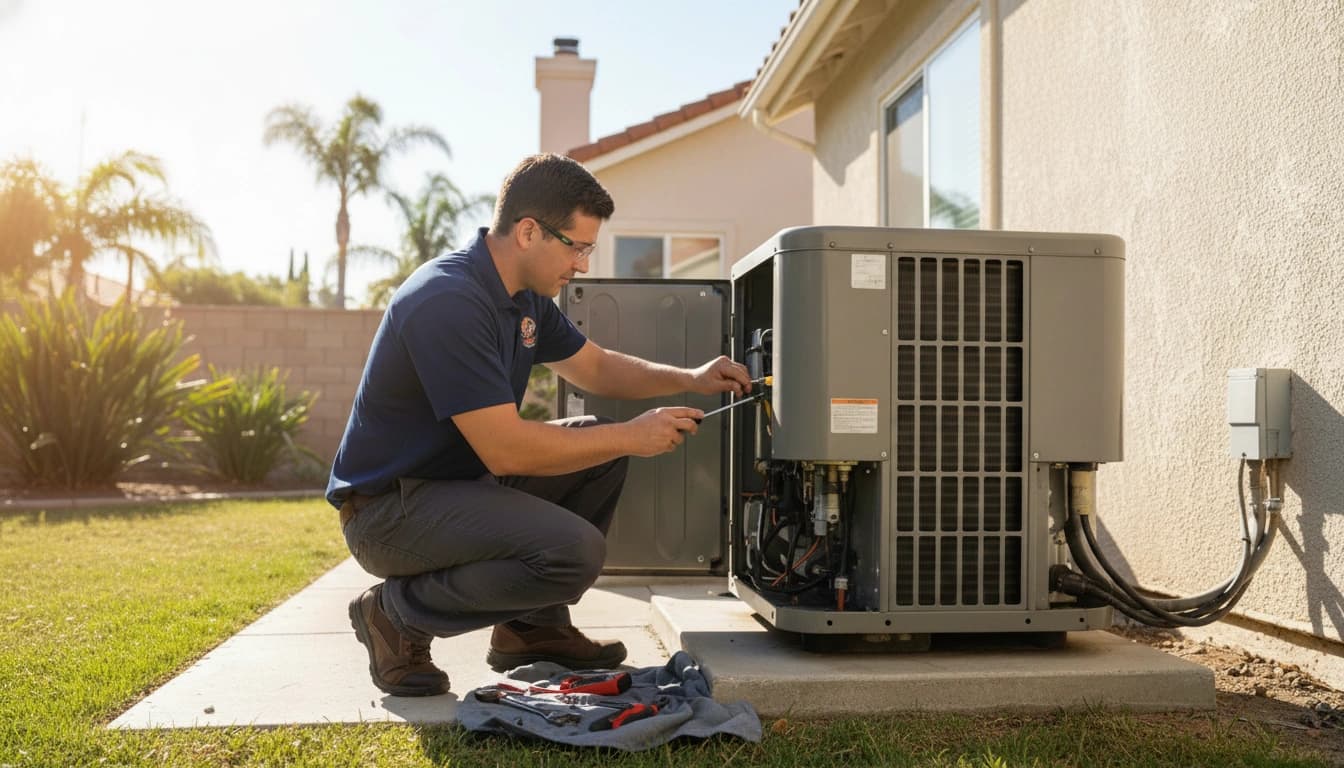
Summer Cooling in the Inland Empire Isn't Cheap — But It Doesn't Have to Hurt
Between June and September, Moreno Valley homeowners routinely see summer electric bills triple their winter baseline. Southern California Edison's tiered pricing punishes heavy AC use, and once you cross into the highest tier, every additional kilowatt-hour costs nearly double. The good news: most of that waste is preventable. These 12 tactics come straight from our field technicians and consistently save homeowners across Moreno Valley and neighboring Riverside between 15% and 30% on their summer bills.
1. Set Your Thermostat to 78°F When You're Home
Every degree below 78°F increases cooling costs by roughly 3–5%. If 78 feels warm, add a ceiling fan (spinning counter-clockwise) — moving air makes 78°F feel like 74°F at a fraction of the energy cost.
2. Program a Setback for When You're Out
Bumping the thermostat up 7–10°F for eight hours a day can trim 10% off your annual cooling bill. A modern programmable or smart thermostat pays for itself in one summer.
3. Change Your Air Filter Every 30–60 Days During Summer
A dirty filter forces your blower motor to work harder, shortening equipment life and driving up runtime. It's the cheapest maintenance step you can perform — and one our HVAC maintenance team catches on every visit.
4. Close Blinds and Curtains on West-Facing Windows After Noon
Solar heat gain through unshaded windows can add 5–7°F to a room by 4 p.m. Blackout curtains or cellular shades are especially effective in stucco tract homes common across the Inland Empire.
5. Cook Outside When You Can
Running an oven at 400°F for an hour can raise your indoor temperature by 2–3°F and force your AC into overtime for the rest of the evening. The grill isn't just for flavor — it's cheaper cooling.
6. Seal the Leaks Around Doors, Windows, and Attic Hatches
The average home loses 20–30% of its conditioned air through unsealed gaps. Weatherstripping and caulk cost under $30 and take an afternoon.
7. Insulate Your Attic to R-38 or Higher
California Title 24 requires R-30 for existing homes, but R-38 to R-49 is the sweet spot for cutting summer cooling loads in the Inland Empire.
8. Clear the Space Around Your Outdoor Condenser
Overgrown shrubs, weeds, or storage items within 2 feet of the outdoor unit choke airflow and drop efficiency by up to 15%. A quick trim is free horsepower for your system.
9. Have Your Ductwork Inspected
Leaky ducts in an attic can waste 20–40% of the air your AC produces before it ever reaches a vent. If some rooms cool poorly, this is often the culprit. Our team pressure-tests duct systems during a full HVAC tune-up.
10. Upgrade to a High-Efficiency System If Yours Is 12+ Years Old
Modern SEER2-rated systems use 30–50% less electricity than a 15-year-old unit doing the same cooling work. If yours is limping into another summer, a new AC installation often pays for itself in energy savings within 7–8 years.
11. Consider Solar to Offset Peak Rates
Rooftop solar in the Inland Empire produces its most power exactly when your AC needs it most — hot afternoons. Combined with a right-sized HVAC system, solar can eliminate the tier-3 rate exposure entirely.
12. Book a Pre-Summer Diagnostic
A single tune-up can restore lost efficiency, catch failing capacitors, and top off refrigerant before a heat wave turns a small problem into an emergency AC repair call. The U.S. Department of Energy's official cooling guide confirms professional maintenance as the single highest-ROI cooling investment homeowners can make.
Ready to Cut Your Summer Bill?
Our NATE-certified technicians serve every neighborhood in Moreno Valley and across the Inland Empire. Book a same-day diagnostic or a full seasonal tune-up online, or call (951) 331-3310. Request your free estimate today.
About the Author
Justin Jaszewski
Co-Founder & NATE-Certified Technician
Justin is the co-founder of It's No Sweat Heat & Air and a NATE-certified HVAC technician with over 25 years of hands-on experience across Moreno Valley and the Inland Empire. He leads the company's technical standards, trains every technician on the team, and personally inspects complex installations. Justin holds California HVAC license #1058772 and specializes in residential system design, load calculations, and energy-efficiency upgrades.